quinta-feira, 16 de abril de 2020

Top 15 Best Operating System Professional Hackers Use

Top 10 Best Operating System Professional Hackers Use

Top 15 Best Operating System Professional Hackers Use

Top 15 Best Operating System Professional Hackers Use

A hacker is someone who seeks and exploits the weaknesses of a computer system or network computing. Hackers may be motivated by a multitude of reasons, such as profit, protest, challenge, enjoyment or to assess these weaknesses to help in removing them.
The listed operating systems are based on the Linux kernel so it is all free operating systems.

1. Kali Linux

Kali Linux maintained and funded by Offensive Security Ltd. and it is first on our list. Kali Linux is a Debian-derived Linux distribution designed for digital forensics and penetration testing. It was developed by Mati Aharoni and Devon Kearns of Offensive Security through rewriting BackTrack, its previous forensics Linux distribution based on Ubuntu. Kali Linux has a specific project for the withdrawal of compatibility and portability of Android-specific devices, called Kali Linux NetHunter. It is the first open test platform penetration Source for Nexus Android devices, created as a joint effort between the member of the Kali "BinkyBear" Security and offensive community. It supports Wireless 802.11 frame injection, one-click configurations MANA Evil access point, keyboard HID (Teensy as attacks), as well as attacks MITM USB Mala.

2. Back Box

Back Box is an evaluation penetration testing Linux distribution and Ubuntu-based security aimed at providing an analysis of computer network systems and toolkit. Desktop environment back box includes a complete set of tools needed for ethical hacking and security testing.

3. Parrot Security OS

Parrot Security OS is a GNU / Linux distribution based on Debian. Fue built in order to perform penetration tests (safety information), vulnerability assessment and mitigation, Computer Forensics and Anonymous Surfing. Ha been developed by the team of Frozen box.
Parrot is based on the stable branch (Jessie) of Debian, a Linux 4.1 kernel hardened customized with a branch grsecurity patched available. The desktop environment is MATE fork of Gnome 2, and the default display manager is LightDM. The project is certified to run on machines with 265MB of RAM minimum follow and it is suitable for both 32-bit (i386) and 64-bit (amd64), with a special edition that works on 32-bit machines of age (486). Moreover, the project is available for Armel and armhf architectures. It even offers an edition (both 32 bit and 64 bit) developed for servers only for pen testing cloud.

4. Live Hacking OS

Live Hacking OS is a Linux distribution packed with tools and utilities for ethical hacking, penetration testing, and countermeasure verification. It includes embedded GUI GNOME user. There is a second variation available which has only the command line and requires much fewer hardware requirements.

5. DEFT Linux

DEFT stands for Digital Evidence and Forensic Toolkit and it is a distribution of Linux open source software built around the DART (Toolkit for Advanced Response Digital) and is based on the Ubuntu operating system. It has been designed from scratch to offer some of the best computer forensics open source and incident response tools that can be used by individuals, IT auditors, investigators, military, and police.

6. Samurai Web Testing Framework

The Samurai Web Testing Framework is a live Linux environment which has been pre-configured to function as a web pen-testing environment. The CD contains the best of open source and free tools that focus on testing and websites that attack. In the development of this environment, it is based on our selection of tools that we use in our practice of security. Hence, it includes the tools that were used in the four steps of a pen-test web.

7. Network Security Toolkit

The Network Security Toolkit (NST) is a Live CD based on Linux that provides a set of security tools computing and open source network to carry out routine security tasks and diagnostic networks and tracing. The distribution can be used as an analysis of network security, validation and monitoring tool for servers hosting virtual machines. NST has management capabilities similar to Fedora packages and maintains its own repository of additional packages.

8. Bugtraq

Bugtraq is a mailing list dedicated to safety issues in computers. On-topic issues new discussions about vulnerabilities, security-related notices providers, operating methods, and how to fix them. This is a mailing list of large volume, and almost all new vulnerabilities are there. Bugtraq computer freaks and experienced developers are discussed, is available in Debian, Ubuntu and openSUSE 32 and 64-bit architectures.

9. NodeZero

NodeZero is an open source system based on the operating core derived from the most popular Linux distribution in the world, Ubuntu, and designed to be used for penetration testing operations. The distribution can be downloaded as an ISO image live DVD, which will also take place on computers that support both 32-bit (x86) and 64-bit (x86_64) instruction set. Besides the fact that it allows you to start the live system, start menu contains several advanced features such as the ability to perform a diagnostic test of system memory, boot from local disk options, start the installer directly and to start in safe graphics mode, text mode or in debug mode.
Default graphical desktop environment NodeZero is powered by GNOME, which uses the classic GNOME interface. It has a design of two panels and uses the default software repositories of Ubuntu.

10. Pentoo

Pentoo is a Live CD and Live USB OS designed for penetration testing and security assessment. It is based on Gentoo Linux, Pentoo is offered both as 32-bit and 64-bit live cd which is installable. Pentoo is also available as a superposition of an existing Gentoo installation. It has conductors packet injection patched wifi, GPGPU cracking software, and plenty of tools for penetration testing and security assessment. The kernel includes Pentoo grsecurity and PAX hardening and additional patches with the binary compiled from a string of hardened with the latest nightly versions of some tools that are available.

#11 Live Hacking OS

Well, this Linux distro actually comes with some useful hacking tools which are often used in penetration testing or ethical hacking purpose. Live Hacking OS consists of the GNOME inbuilt. The operating system is really easy to operate and it can work on less RAM.

#12 Knoppix STD

This is another best Linux distro which focuses on tools for computer security. Knoppix STD brings some advanced tools for Password cracking, Firewalls, Network Utilities, Honeypots, Wireless Networking and more. This is one of the most used operating systems for Hackers.

#13 Cyborg Hawk

Cyborg Hawk is a new operating system which is based on Ubuntu Linux. Well, lots of hackers talk about Cyborg hawk and its one of the most powerful and cutting-edge penetration testing distribution that has ever been created. The operating system houses more than 700 tools for different purposes.

#14 Blackbuntu

Well, this is another operating system which is based on Linux and it was specially developed for penetration testing. Well, the operating system is very famous amongst hackers and it offers an awesome platform to learn Information security.

#15 Weakerth4n

Well, this is another best operating system which is used by professional hackers. WeakerTh4n actually comes with lots of hacking tools and it's actually a modern operating system for WiFi Hacking. Some of the wireless tools include SQL Hacking, Password Cracking, WiFi attacks, Cisco exploitation and more.
Read more
  1. Pentest Tools Online
  2. How To Hack
  3. Black Hat Hacker Tools
  4. Hack Tools Pc
  5. Pentest Tools For Mac
  6. Hacking Tools For Windows 7
  7. Hack Tools For Windows
  8. Hacking Tools For Beginners
  9. Hacking Tools Windows
  10. Physical Pentest Tools
  11. Hacker Tools Free
  12. Easy Hack Tools
  13. Install Pentest Tools Ubuntu
  14. Wifi Hacker Tools For Windows
  15. What Is Hacking Tools
  16. Hack Tools
  17. Nsa Hack Tools Download
  18. Hack Website Online Tool
  19. Hacker Tools Apk Download
  20. Hacker Tools 2020
  21. Hacker Hardware Tools
  22. Hacking Apps
  23. Pentest Tools Download
  24. Bluetooth Hacking Tools Kali
  25. Pentest Tools Tcp Port Scanner
  26. Hacking Tools Download

How Block Chain Technology Can Help Fight Wuhan Corona Virus Outbreak

As the death toll and the infected cases of widespread coronavirus continue to increase, global organizations and the tech industry has come forward with technology like blockchain to fight coronavirus.

Along with the equipment and monetary support, technology also withstands against the virus with better plans and solutions. Hence, tech industries have started leveraging blockchain technology in the wake of a global health emergency.

Blockchain Helps In Real-Time Online Tracking

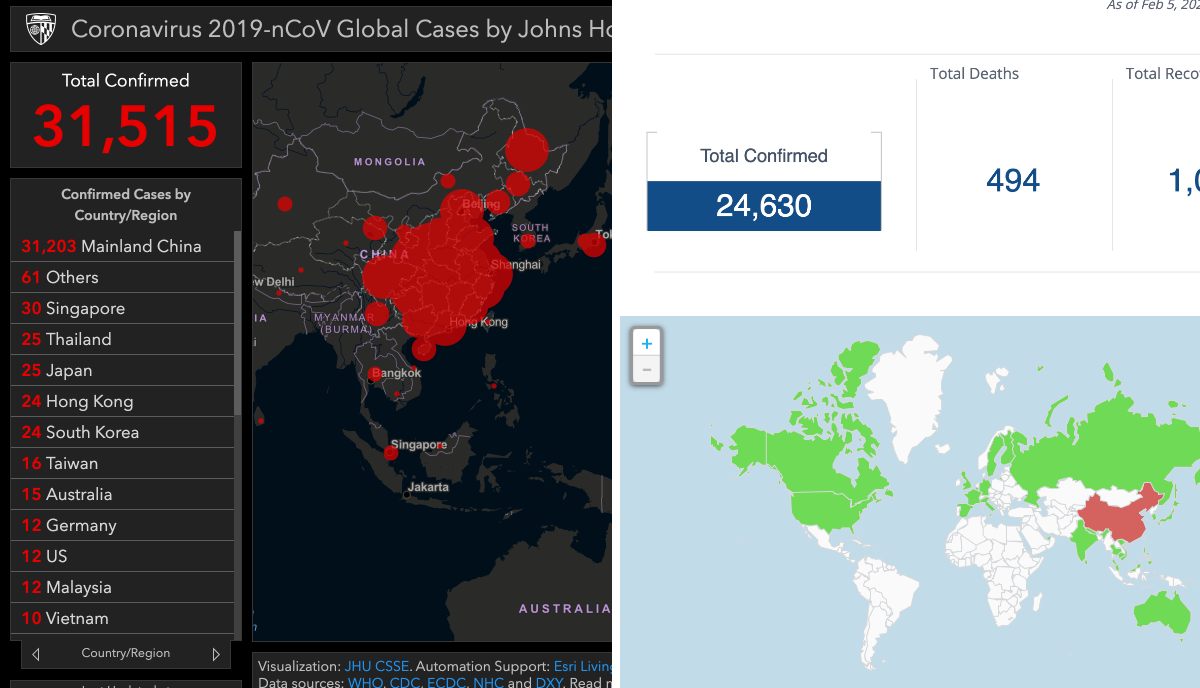
The Center for Systems Science and Engineering has already set up an online platform to track coronavirus and visualize the growing number of infected patients in real-time.

But Acoer, an Atlanta-based blockchain app developer, has also launched an alternative online data visualization tool to easily trail and depict the Cororanvirus outbreak using blockchain technology.

Acoer platform, named HashLog, is more advanced and clear as it pulls the data from the Hedera Hashgraph database using the HashLog data visualization engine.

Hedera Hashgraph is an immutable, transparent and decentralized database based on distributed ledger technology that provides synchronized and unchangeable data from the public networks.

Moreover, researchers, scientists, and journalists can use the HashLog dashboard to understand the spread of the virus and act against it swiftly.

For data sources, Johns Hopkins CSSE extracts data from WHO, CDC, ECDC, NHC, and DXY. On the other hand, Acoer maps the public data, including data from the Center for Disease Control (CDC) and the World Health Organization (WHO). Therefore, data may differ on both platforms.

(left) CSSA and Acoer (right)

Blockchain Can Help Monitor And Control Money Flow

To fight the further spread of the coronavirus (2019-nCoV) outbreak globally, China has also received abundant monetary support from the international community to create better action plans.

China's govt-led organization and charities are responsible for overseeing and utilizing the influx of money to research and generate a solution for coronavirus. But due to the lack of coordination and mismanagement among the various organization, money is not being laid out to curb the crisis.

Recently, a paper published by Syren Johnstone, from the University of Hong Kong, discusses the problems encountered by charities, in China and elsewhere. It argues that the present crisis should be seen as a call to arms.

Syren urges for a borderless solution with better management of donations and implementation using the emerging tech like Blockchain and Artificial Intelligence.

Keeping that in mind, Hyperchain, a Chinese company, also announced blockchain-based charity platform to streamline the donation from all over the world.

Since the Hyperchain platform is based on the blockchain, it offers more transparency among the sender and receiver of funds to bring trust and immutability to restrict the transaction data deletion.

Overall, Hyperchain improves administrative function for the money and also extends the logistics actions.

@HACKER NT

Related articles


HACK SNAPCHAT ACCOUNT BY MAC SPOOFING

In the last article, I have discussed a method on how to hack SnapChat account using SpyStealth Premium App. In this article, I am gonna show you an advanced method that how to hack SnapChat account by mac spoofing. It works same as WhatsApp hacking by mac spoofing. It's a bit more complicated than the last method discussed and requires proper attention. It involves the spoofing of the mac address of the target device. Let's move on how to perform the attack.

HOW TO HACK SNAPCHAT ACCOUNT BY MAC SPOOFING?

Note: This method will work if SnapChat is created on a phone number.
Here I will show you complete tutorial step by step of hacking the SnapChat account. Just understand each step carefully.
  1. Find out the victim's phone and note down it's Mac address. To get the mac address in Android devices, go to Settings > About Phone > Status > Wifi Mac address. And here you'll see the mac address. Just write it somewhere. We'll use it in the upcoming steps.
  2. As you get the target's mac address, you have to change your phone's mac address with the target's mac address. Perform the steps mentioned in this article on how to spoof mac address in android phones.
  3. Now install SnapChat on your phone and use victim's number while you're creating an account. It'll send a verification code to victim's phone. Just grab the code and enter it here.
  4. Once you do that, it'll set all and you'll get all chats and messages which victims sends or receives.
This method is really a good one but very difficult for the non-technical users. Only use this method if you're technical skills and have time to perform every step carefully. Otherwise, you can hack SnapChat account using Spying app.
Related articles

HOW TO HACK A FACEBOOK ACCOUNT? STEP BY STEP

Phishing is the way to obtain sensitive information such as usernames, passwords, and credit card details or any other confidential information, often for malicious reasons, by disguising as a trustworthy entity in an electronic communication. Phishing is typically carried out by several ways like email spoofing or instant messaging, and it often directs users to enter personal information at a fake website, the look and feel of which are almost identical to the legitimate one. In this tutorial, I will be showing how to hack a facebook account through phishing.

SO, HOW TO HACK A FACEBOOK ACCOUNT?

There are few techniques by which you can hack a facebook account but here the easiest way we'll discuss.

REQUIREMENTS

  1. Phisher Creator ( Fake page generator)
  2. Hosting ( To host a fake page). Either you can purchase one or also can use free hosting like 110mb.com. But in free hosting, the account will be suspended after a few logins.

STEPS TO FOLLOW

  1. Download phisher creator and run it.
  2. As you run it, you'll see a screen like the shown below. Here you can type the fields as I have done. 
  3. Once you hit the Create Phisher button, it'll create a fake facebook index page and fb_login.php file in the output folder.
  4. Now you need to upload these both files index.html and fb_login.php to the hosting account.
  5. After uploading the file, open the index.html file path. It will open up a page like same facebook page as you can see below.
  6. We're all done, now we just need to copy the URL of our fake page and distribute it to the victims, you just have to trick them with your social engineering that how you convenience them to open this URL to login facebook. Once someone tries to login through your fake facebook page URL, you'll get their account username and password in the log_file.txt in the same directory of hosting where you have uploaded index.php and fb_login.php.
Hope it'll work fine for you and you have learned how to hack a facebook account. If you find any question or query related to this, feel free to comment below or you can also follow another way that might work well for you to hack facebook account.
Related articles

Microsoft Issues Patches For 2 Bugs Exploited As Zero-Day In The Wild

It's April 2020 Patch Tuesday, and during these challenging times of coronavirus pandemic, this month's patch management process would not go easy for many organizations where most of the resources are working remotely. Microsoft today released the latest batch of software security updates for all supported versions of its Windows operating systems and other products that patch a total of 113

via The Hacker News

Related links


DOWNLOAD NANOCORE RAT 1.2.2.0 CRACKED – REMOTE ADMINISTRATION TOOL

NanoCore is one of the most powerful RATs ever created. It is capable of taking complete control of a victim's machine. It allows a user to control the system with a Graphical User Interface (GUI). It has many features which allow a user to access remote computer as an administrator. Download nanocore rat 1.2.2.0 cracked version free of cost.
NanoCore's developer was arrested by FBI and pleaded guilty in 2017 for developing such a malicious privacy threat, and sentenced 33 months in prison.

FEATURES

  • Complete Stealth Remote Control
  • Recover Passwords from the Victim Device
  • Manage Networks
  • Manage Files
  • Surveillance
  • Plugins (To take it to the next level)
  • Many advanced features like SCRIPTING

DOWNLOAD NANOCORE RAT 1.2.2.0 CRACKED – REMOTE ADMINISTRATION TOOL

Related links

Testing SAML Endpoints For XML Signature Wrapping Vulnerabilities

A lot can go wrong when validating SAML messages. When auditing SAML endpoints, it's important to look out for vulnerabilities in the signature validation logic. XML Signature Wrapping (XSW) against SAML is an attack where manipulated SAML message is submitted in an attempt to make the endpoint validate the signed parts of the message -- which were correctly validated -- while processing a different attacker-generated part of the message as a way to extract the authentication statements. Because the attacker can arbitrarily forge SAML assertions which are accepted as valid by the vulnerable endpoint, the impact can be severe. [1,2,3]

Testing for XSW vulnerabilities in SAML endpoints can be a tedious process, as the auditor needs to not only know the details of the various XSW techniques, but also must handle a multitude of repetitive copy-and-paste tasks and apply the appropriate encoding onto each message. The latest revision of the XSW-Attacker module in our BurpSuite extension EsPReSSo helps to make this testing process easier, and even comes with a semi-automated mode. Read on to learn more about the new release! 

 SAML XSW-Attacker

After a signed SAML message has been intercepted using the Burp Proxy and shown in EsPReSSO, you can open the XSW-Attacker by navigating to the SAML tab and then the Attacker tab.  Select Signature Wrapping from the drop down menu, as shown in the screenshot below:


To simplify its use, the XSW-Attacker performs the attack in a two step process of initialization and execution, as reflected by its two tabs Init Attack and Execute Attack. The interface of the XSW-Attacker is depicted below.
XSW-Attacker overview

The Init Attack tab displays the current SAML message. To execute a signature wrapping attack, a payload needs to be configured in a way that values of the originally signed message are replaced with values of the attacker's choice. To do this, enter the value of a text-node you wish to replace in the Current value text-field. Insert the replacement value in the text-field labeled New value and click the Add button. Multiple values can be provided; however, all of which must be child nodes of the signed element. Valid substitution pairs and the corresponding XPath selectors are displayed in the Modifications Table. To delete an entry from the table, select the entry and press `Del`, or use the right-click menu.

Next, click the Generate vectors button - this will prepare the payloads accordingly and brings the Execute Attack tab to the front of the screen.

At the top of the Execute Attack tab, select one of the pre-generated payloads. The structure of the selected vector is explained in a shorthand syntax in the text area below the selector.
The text-area labeled Attack vector is editable and can be used to manually fine-tune the chosen payload if necessary. The button Pretty print opens up a syntax-highlighted overview of the current vector.
To submit the manipulated SAML response, use Burp's Forward button (or Go, while in the Repeater).

Automating XSW-Attacker with Burp Intruder

Burp's Intruder tool allows the sending of automated requests with varying payloads to a test target and analyzes the responses. EsPReSSO now includes a Payload Generator called XSW Payloads to facilitate when testing the XML processing endpoints for XSW vulnerabilities. The following paragraphs explain how to use the automated XSW attacker with a SAML response.

First, open an intercepted request in Burp's Intruder (e.g., by pressing `Ctrl+i`). For the attack type, select Sniper. Open the Intruder's Positions tab, clear all payload positions but the value of the XML message (the `SAMLResponse` parameter, in our example). Note: the XSW-Attacker can only handle XML messages that contain exactly one XML Signature.
Next, switch to the Payloads tab and for the Payload Type, select Extension-generated. From the newly added Select generator drop-down menu, choose XSW Payloads, as depicted in the screenshot below.


While still in the Payloads tab, disable the URL-encoding checkbox in the Payload Encoding section, since Burp Intruder deals with the encoding automatically and should suffice for most cases.
Click the Start Attack button and a new window will pop up. This window is shown below and is similar to the XSW Attacker's Init Attack tab.


Configure the payload as explained in the section above. In addition, a schema analyzer can be selected and checkboxes at the bottom of the window allow the tester to choose a specific encoding. However, for most cases the detected presets should be correct.

Click the Start Attack button and the Intruder will start sending each of the pre-generated vectors to the configured endpoint. Note that this may result in a huge number of outgoing requests. To make it easier to recognize the successful Signature Wrapping attacks, it is recommended to use the Intruder's Grep-Match functionality. As an example, consider adding the replacement values from the Modifications Table as a Grep-Match rule in the Intruder's Options tab. By doing so, a successful attack vector will be marked with a checkmark in the results table, if the response includes any of the configure grep rules.

Credits

EsPReSSO's XSW Attacker is based on the WS-Attacker [4] library by Christian Mainka and the original adoption for EsPReSSO has been implemented by Tim Günther.
Our students Nurullah Erinola, Nils Engelberts and David Herring did a great job improving the execution of XSW and implementing a much better UI.

---

[1] On Breaking SAML - Be Whoever You Want to Be
[2] Your Software at My Service
[3] Se­cu­ri­ty Ana­ly­sis of XAdES Va­li­da­ti­on in the CEF Di­gi­tal Si­gna­tu­re Ser­vices (DSS)
[4] WS-Attacker
Related posts

Insecurities Of WhatsApp's, Signal's, And Threema's Group Chats

Recently, the theoretical and practical analysis of secure instant messenger protocols received much attention, but the focus of prior evaluations mostly lay in one-to-one communication. In this blog post we want to presents the results of our work that focuses on group chat protocols of three major instant messenger applications; namely Signal, WhatsApp, and Threema.

In this blog post, we aim to focus on the practical impact and the found weaknesses identified by our analysis. The interested reader may also look into our paper for more details.


Our Aim and What We Were Looking For

End-to-end encryption protects the confidentiality of communication that is forwarded via central servers to the designated receivers. As a consequence, neither parties on the network route of the messages, nor the provider of the central server (e.g. the WhatsApp server) should be able to read any information out of the observation of the communication. In particular, no other user of the application should have access to the communication. Further it might be desirable to require that also the messages' integrity is end-to-end protected and that a sender is informed about the delivery state of sent messages.
Delivery state information in Signal (upper screenshot) and WhatsApp (lower screenshot)

In a two party scenario, this analysis is rather fixed to two components of the protocol: the key establishment between both parties and the communication channel protection using the established key (mostly consisting of an encryption algorithm and a scheme for providing integrity like MACs or signature schemes).

Regarded attackers


In a group setting, the same attackers apply (network, provider, other users). However the requirements for secure communication differ. It is further necessary that only group members can write to and read content from the group. Additionally, only administrators of the group are able to add new members.

In addition to these standard requirements, we also evaluated the protocols' security guarantees if the client's secrets were revealed (forward secrecy and future secrecy).

Our Approach

We analyzed the mentioned protocols by reading the source code and debugging the apps. We also used alternative open source implementations of Threema and WhatsApp as a help and we traced the network traffic. When using alternative implementations, we only took incoming traffic into account, which was generated by official applications. Thereby we extracted the protocol descriptions and evaluated them regarding the defined requirements.

Our Findings

In WhatsApp and Threema, the provider was able to manipulate the set of members. Threema only allowed the provider to rewind the set of members to a previous state. As a consequence previously removed members could have been added to the group again. The WhatsApp provider is able to arbitrarily manipulate the member set. Thereby further members and administrators can be added to the group. Since the authenticity of group manipulation is not protected, the WhatsApp provider can set the real group administrator as the source of manipulation even though this administrator was not active.

Since Signal's key exchange protocol provides future secrecy, we also evaluated the protocol's ability to recover into a secure group state after a member's state was compromised. The essential weakness here is that a sender only needs to know the static group ID to send a message to the group. If a group member receives a message with the correct group ID, no verification regarding the current member set takes place but the message is directly added to the group communication. Consequently it is sufficient to retrieve the group ID in order to send messages to the group. Since Signal treats content messages the same way as messages for the manipulation of the group set, an attacker who knows the group ID can add herself to the group and thereby read the subsequent group communication.

In addition to this, in all cases the delivery state of sent messages was not securely provided. Threema's group chats do not inform the sender about the delivery state while Signal and WhatsApp do not protect the delivery information on the end-to-end layer. Therefore the central provider can forge this information and drop messages without letting the communicating parties detect this.

Also the order of messages was manipulable for the providers of the applications such that the provider is able to deliver the messages in a different order than they were sent. Threema's weakness of rewinding a group state results from missing replay attack protection.

Impact of Weaknesses

Even though end-to-end encryption is implemented in all analyzed applications, the central providers can largely manipulate the communication in groups and partially also read it.
In all applications, the provider can undetectably drop and reorder messages during the delivery and thereby manipulate the view of the communication such that further attacks can be obfuscated.
The central servers of WhatsApp can be used to add arbitrary users to groups and thereby receive their communication.
To achieve the same result for Signal, it suffices to retrieve the group ID. An earlier member who left the group once still knows this ID since it is static. However, in contrast to WhatsApp, the origin of the manipulation is correctly displayed in the Signal application (which was not the fact when we started our analysis).

As a result, the end-to-end protection of WhatsApp is not sufficient to reach confidentiality in groups. For Signal no future secrecy is reached in groups and Threema was vulnerable to replay attacks which resulted in further weaknesses.

Responsible Disclosure

We disclosed our findings to the developers and received varying response. Threema updated their protocol in version 3.14 such that our attacks are not feasible anymore. Moxie Marlinspike responded that Signal is "working on an entirely new group mechanism that we should be deploying soon". WhatsApp did not hold out the prospect of fixing the described vulnerabilities (Update 01/18: According to Facebook's Security Head, the invite links make a fix more difficult [1]; we proposed a way to solve this issue [2]).

[1] https://twitter.com/alexstamos/status/951169036947107840
[2] https://web-in-security.blogspot.de/2018/01/group-instant-messaging-why-baming.html

Read more


  1. Hacking Tools For Kali Linux
  2. Physical Pentest Tools
  3. Pentest Tools Website Vulnerability
  4. Hack Apps
  5. Hacker Tools Software
  6. Hacking Tools Software
  7. Pentest Tools Tcp Port Scanner
  8. Wifi Hacker Tools For Windows
  9. Hacker Tools Free Download
  10. Hack App
  11. Hacking Tools Windows 10
  12. How To Hack
  13. Github Hacking Tools
  14. Pentest Tools Subdomain
  15. Hack Tools 2019
  16. Pentest Tools Bluekeep
  17. Hak5 Tools
  18. Hacking Tools Free Download
  19. Hacking Tools Download
  20. Hacker Security Tools
  21. Hack Tools Mac
  22. Pentest Tools Github
  23. Pentest Tools Apk
  24. Pentest Tools Android
  25. What Is Hacking Tools
  26. Hacker Tools 2019
  27. Hacking Tools For Beginners

terça-feira, 14 de abril de 2020

Insecurities Of WhatsApp's, Signal's, And Threema's Group Chats

Recently, the theoretical and practical analysis of secure instant messenger protocols received much attention, but the focus of prior evaluations mostly lay in one-to-one communication. In this blog post we want to presents the results of our work that focuses on group chat protocols of three major instant messenger applications; namely Signal, WhatsApp, and Threema.

In this blog post, we aim to focus on the practical impact and the found weaknesses identified by our analysis. The interested reader may also look into our paper for more details.


Our Aim and What We Were Looking For

End-to-end encryption protects the confidentiality of communication that is forwarded via central servers to the designated receivers. As a consequence, neither parties on the network route of the messages, nor the provider of the central server (e.g. the WhatsApp server) should be able to read any information out of the observation of the communication. In particular, no other user of the application should have access to the communication. Further it might be desirable to require that also the messages' integrity is end-to-end protected and that a sender is informed about the delivery state of sent messages.
Delivery state information in Signal (upper screenshot) and WhatsApp (lower screenshot)

In a two party scenario, this analysis is rather fixed to two components of the protocol: the key establishment between both parties and the communication channel protection using the established key (mostly consisting of an encryption algorithm and a scheme for providing integrity like MACs or signature schemes).

Regarded attackers


In a group setting, the same attackers apply (network, provider, other users). However the requirements for secure communication differ. It is further necessary that only group members can write to and read content from the group. Additionally, only administrators of the group are able to add new members.

In addition to these standard requirements, we also evaluated the protocols' security guarantees if the client's secrets were revealed (forward secrecy and future secrecy).

Our Approach

We analyzed the mentioned protocols by reading the source code and debugging the apps. We also used alternative open source implementations of Threema and WhatsApp as a help and we traced the network traffic. When using alternative implementations, we only took incoming traffic into account, which was generated by official applications. Thereby we extracted the protocol descriptions and evaluated them regarding the defined requirements.

Our Findings

In WhatsApp and Threema, the provider was able to manipulate the set of members. Threema only allowed the provider to rewind the set of members to a previous state. As a consequence previously removed members could have been added to the group again. The WhatsApp provider is able to arbitrarily manipulate the member set. Thereby further members and administrators can be added to the group. Since the authenticity of group manipulation is not protected, the WhatsApp provider can set the real group administrator as the source of manipulation even though this administrator was not active.

Since Signal's key exchange protocol provides future secrecy, we also evaluated the protocol's ability to recover into a secure group state after a member's state was compromised. The essential weakness here is that a sender only needs to know the static group ID to send a message to the group. If a group member receives a message with the correct group ID, no verification regarding the current member set takes place but the message is directly added to the group communication. Consequently it is sufficient to retrieve the group ID in order to send messages to the group. Since Signal treats content messages the same way as messages for the manipulation of the group set, an attacker who knows the group ID can add herself to the group and thereby read the subsequent group communication.

In addition to this, in all cases the delivery state of sent messages was not securely provided. Threema's group chats do not inform the sender about the delivery state while Signal and WhatsApp do not protect the delivery information on the end-to-end layer. Therefore the central provider can forge this information and drop messages without letting the communicating parties detect this.

Also the order of messages was manipulable for the providers of the applications such that the provider is able to deliver the messages in a different order than they were sent. Threema's weakness of rewinding a group state results from missing replay attack protection.

Impact of Weaknesses

Even though end-to-end encryption is implemented in all analyzed applications, the central providers can largely manipulate the communication in groups and partially also read it.
In all applications, the provider can undetectably drop and reorder messages during the delivery and thereby manipulate the view of the communication such that further attacks can be obfuscated.
The central servers of WhatsApp can be used to add arbitrary users to groups and thereby receive their communication.
To achieve the same result for Signal, it suffices to retrieve the group ID. An earlier member who left the group once still knows this ID since it is static. However, in contrast to WhatsApp, the origin of the manipulation is correctly displayed in the Signal application (which was not the fact when we started our analysis).

As a result, the end-to-end protection of WhatsApp is not sufficient to reach confidentiality in groups. For Signal no future secrecy is reached in groups and Threema was vulnerable to replay attacks which resulted in further weaknesses.

Responsible Disclosure

We disclosed our findings to the developers and received varying response. Threema updated their protocol in version 3.14 such that our attacks are not feasible anymore. Moxie Marlinspike responded that Signal is "working on an entirely new group mechanism that we should be deploying soon". WhatsApp did not hold out the prospect of fixing the described vulnerabilities (Update 01/18: According to Facebook's Security Head, the invite links make a fix more difficult [1]; we proposed a way to solve this issue [2]).

[1] https://twitter.com/alexstamos/status/951169036947107840
[2] https://web-in-security.blogspot.de/2018/01/group-instant-messaging-why-baming.html

More information


  1. Hack Rom Tools
  2. Ethical Hacker Tools
  3. Hak5 Tools
  4. Hacker Tools Free
  5. Underground Hacker Sites
  6. Game Hacking
  7. Hack Tools For Ubuntu
  8. New Hacker Tools
  9. Physical Pentest Tools
  10. Physical Pentest Tools
  11. What Are Hacking Tools
  12. Hack Tools Pc
  13. Pentest Box Tools Download
  14. Hack Tools Online
  15. Tools 4 Hack
  16. World No 1 Hacker Software
  17. Hacker Tools For Mac
  18. Pentest Tools Open Source
  19. Hacking Tools Pc
  20. Hacker Tools For Mac
  21. Hacking Tools Name
  22. Best Pentesting Tools 2018
  23. Hack App
  24. Free Pentest Tools For Windows
  25. Hacker Tools Apk Download

Quando eu te falei em amor

Quando os meus olhos te tocaram
Eu senti que encontrara
A outra, metade de mim
Tive medo de acordar
Como se vivesse um sonho
Que não pensei em realizar
E a força do desejo
Faz me chegar perto de ti

Quando eu te falei em amor
Tu sorriste para mim
E o mundo ficou bem melhor
Quando eu te falei em amor
Nos sentimos os dois
Que o amanha vem depois
E não no fim

Estas linhas que hoje escrevo
São do livro da memória
Do que eu sinto por ti
E tudo o que tu me das
É parte da história que eu ainda não vivi
E a força do desejo
Faz me chegar de ti

Quando eu te falei em amor
Tu sorriste para mim
E o mundo ficou bem melhor
Quando eu te falei em amor
Nos sentimos os dois
Que o amanha vem depois e não no fim

André Sardet

Collide

The dawn is breaking
A light shining through
You're barely waking
And I'm tangled up in you
Yeah

But I'm open, you're closed
Where I follow, you'll go
I worry I won't see your face
Light up again

Even the best fall down sometimes
Even the wrong words seem to rhyme
Out of the doubt that fills my mind
I somehow find, you and I collide

I'm quiet, you know
You make a first impression
I've found I'm scared to know
I'm always on your mind

Even the best fall down sometimes
Even the stars refuse to shine
Out of the back you fall in time
I somehow find, you and I collide

Don't stop here
I've lost my place
I'm close behind

Even the best fall down sometimes
Even the wrong words seem to rhyme
Out of the doubt that fills your mind

You finally find, you and I collide
You finally find You and I collide
You finally findYou and I collide

Howie Day


Everything

You're a falling star, You're the get away
car.

You're the line in the sand when I go too
far.

You're the swimming pool, on an August day.
And You're the perfect thing to see.

And you play it coy, but it's kinda cute.
Ah, When you smile at me you know exactly what you
do.

Baby don't pretend, that you don't know it's
true.

Cause you can see it when I look at you.

And in this crazy life, and through these crazy
times

It's you, it's you, You make me sing.
You're every line, you're every word, you're
everything.


You're a carousel, you're a wishing well,
And you light me up, when you ring my bell.
You're a mystery, you're from outer space,
You're every minute of my everyday.

And I can't believe, uh that I'm your man,
And I get to kiss you baby just because I
can.

Whatever comes our way, ah we'll see it
through,

And you know that's what our love can do.

And in this crazy life, and through these crazy
times

It's you, it's you, You make me sing
You're every line, you're every word, you're
everything.


So, La, La, La, La, La, La, La

And in this crazy life, and through these crazy
times

It's you, it's you, You make me sing.
You're every line, you're every word, you're
everything.

You're every song, and I sing along.
Cause you're my everything.
yeah, yeah

So, La, La, La, La, La, La, La

Michael Bublé